

Program Catalog
- Popular Programs

- Management Programs

- Honorary Programs

- Post-Doctorate Programs

- Our Partner Universities

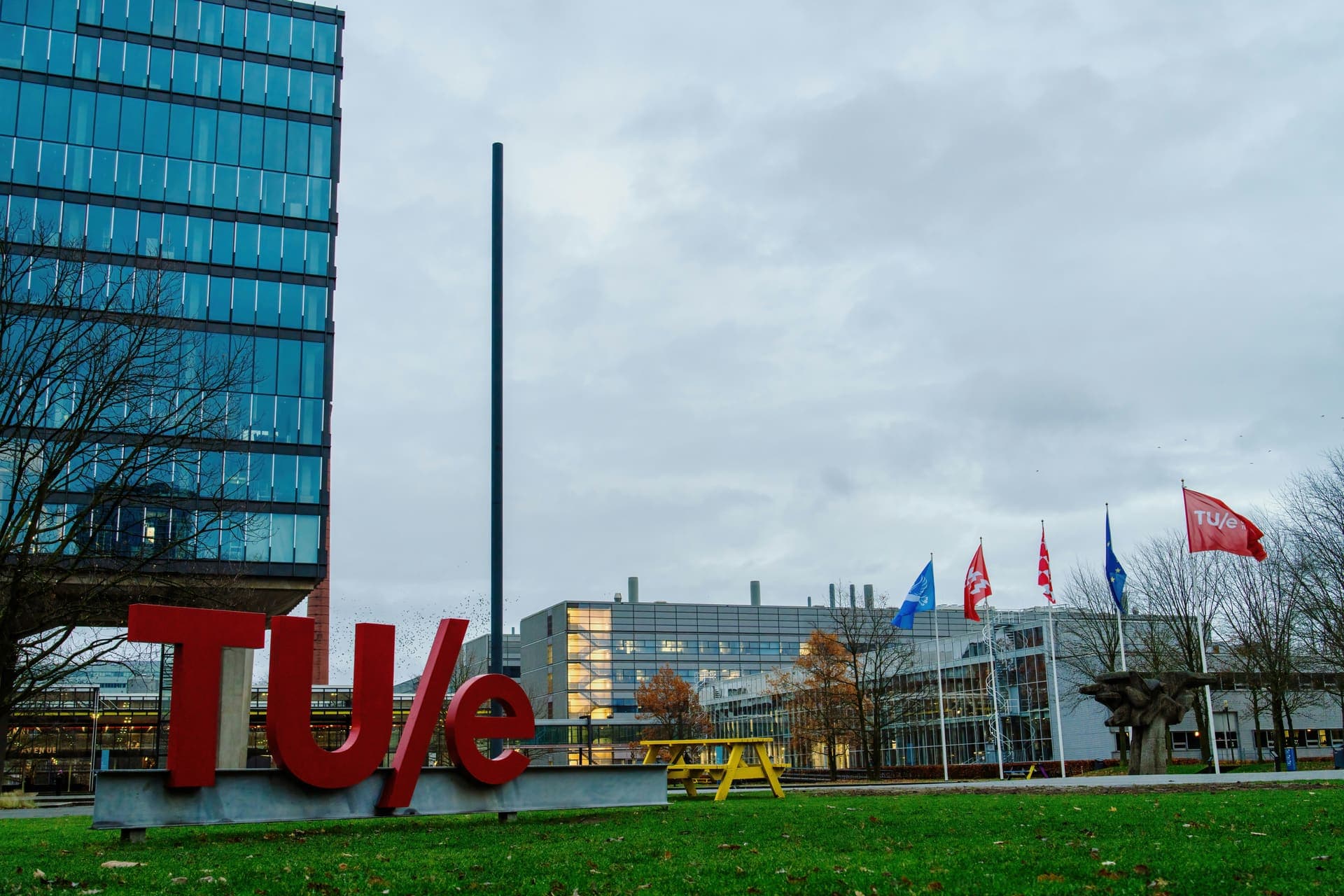
PhD from USA Universities: Cost, Requirements & Scope
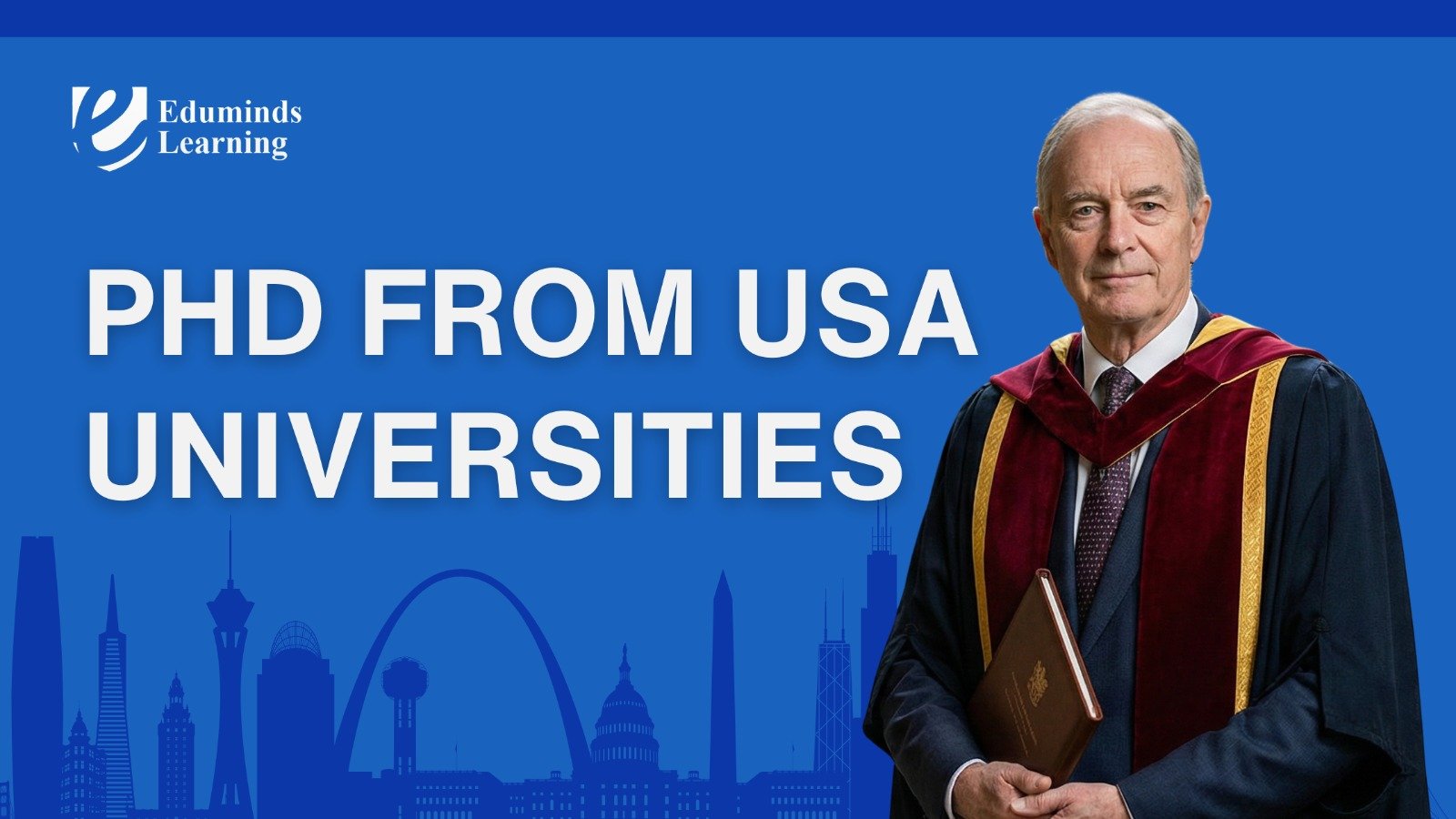
Doing a PhD means not only having a title but also getting yourself to dedicate oneself to the greatest academic inquiry, innovation and intellectual leadership. To most ambitious scholars around the globe, the dream is simply to receive PhD in USA and train in one of the most sophisticated research ecosystems in the world.
However, most students raise basic questions before submitting an application: Wht is PhD? Competitiveness of admission? What does it cost? Is it career development worth it? And the last but not least – how to successfully get PhD in USA?
This is the guide that will deconstruct all you need to know such as admission requirements and funding models to actual career outcomes as per what is being occurring in American higher education as per current practice and real-life trends.
The highest educational degree that universities grant is a PhD (Doctor of Philosophy). Although the name implies otherwise, it is not confined to philosophy, but it covers sciences, engineering, humanities, business, technology, health sciences and others.
At its core, a PhD is:
In the U.S., the duration of typical is 4-7 years.
A PhD, unlike the master degrees with heavy coursework, equips you to be an independent researcher. You do not simply study what is already known to you, but bring it to enlarge.
The PhD programs in the United States are designed differently as compared to most other nations. The course work is typically done in the first 12 months or two years, followed by the passing of qualifying exams and transfer to full-time research, where the student works under a faculty advisor.
This is why thousands of foreign scholars apply to the PhD of the universities of the USA annually.
The US universities spend billions every year in research. The top researchers are institutions like MIT, Stanford, Harvard and state research universities that are constantly top in the world. Availability of funded laboratories, research scholarships and interdisciplinary interaction is a significant difference in the quality of doctoral training.
The most significant of them is that a PhD in the U.S. is necessarily costly. As a matter of fact, the majority of the reputable programs provide: Full tuition waiver Alternatives: alike, yet with higher stipend amount, dependent on the institution and place (annual): $30,000 to 40,000.
This makes it economically feasible among the high quality of students.
An American doctorate usually has high international status, and it beams, opening academic opportunities, industry, policy studies, and multinational enterprises.
To know about how to get PhD in USA, one needs to have a clear understanding of the requirements in terms of admissions and strategy of preparing.
Most programs require:
The admissions committees focus more on research potential than on grades.
As part of my experience advising doctoral applicants, they are the best candidates because they possess:
Phd admissions are not on general interest basis – they are on research correspondence basis.
In your SOP, the following things should be clearly explained:
Instances of generic SOPs are instantly rejected.
There are still programs that need the GRE scores but an extensive number has optionalized it. International students are required to take tests of English proficiency (IELTS/TOEFL).
The admissions of the PhDs are advisor driven as opposed to the undergraduate admissions. Healthy prospects of admission reduce enormously when a professor does not accept students in your field of research.
Although each discipline has its own requirements, the majority of programs have:
Coursework (1–2 years) Qualifying/Comprehensive Exams: The qualifying/comprehensive exams are administered at the conclusion of the initial three and a half years following the enrollment in the nursing school's program.Qualifying/Comprehensive Exams: The qualifying/comprehensive exams are given at the end of the first three and a half years after one is enrolled into the program of the nursing school.
Therefore, the dissertation proposal is defensed.
Students must demonstrate:
Students in STEM industries tend to work in laboratories. Independent archival or theoretical research prevails in humanities.
The cost system is highly reliant on financing.
In case not funded, tuition is between:
Projected yearly expenses of living:
Practically, the majority of doctoral students in accredited programs are provided with:
The stipend does not turn you into a rich person, but it enables you to lead a simple life without tuition.
Doctorates do not equally provide such career flexibility. In order to attain high levels of industry mobility, the following areas are considered to be the best PhD courses to develop a career:
1. Computer Science & AI Great need in technology, research and start up.
2. Data Science & Statistics Appreciated in other sectors – finance, health care, consulting.
3. Biomedical Sciences High Research and industry crossover biotech.
4. Engineering (Electrical, Mechanical, Chemical) Strong profitability in research and development and company innovation.
5. Business ( Finance, Strategy, Organizational Behavior) Sweds the gates to both university and business.
6. Economics Good positioning in policy institutions, think tanks and world bodies.
Long-term employability Interdisciplinary PhDs tend to be more successful than highly-focused ones.
The USA universitates PhD is provided in three major career routes:
1. Academia
2. Industry Over the last few years, there is an influx of PhD students in the industry over academia. Examples include:
3. Government & Policy PhDs are valued in:
This will solely be based on your motivation.
A PhD is worth it if:
It may not be ideal if:
As a career strategist, a doctorate is not a degree, but a lifetime decision-making.
Take the case of a student in India who did his or her Master in Computer Science. Rather than take a mid-tier software position, they take a funded PhD in Machine Learning in the U.S. After five years:
This shows the ability of strategic doctoral training to accumulate career value.
In case of PhD in USA, do not do the following mistakes:
In the U.S., the rates of PhD attrition are estimated at 40-50 percent in certain areas. Planning and coordination is important.
In case you are serious about pursuing a PhD in university of USA:
1. Begin research (in advance at least 18 months prior to intake). 2. Get publication or presentations as per research. 3. Form a relationship with professors. 4. Target programs were in line with your long-term objectives. 5. Get the financing and then commit.
The doctoral system of the United States of America recognizes clarity, initiative, and research potential and not only academic scores.
The knowledge economy is growing at an alarming pace all over the world. The industries are changing with AI, biotechnology, climate science and advanced analytics.
The U.S. is becoming more interdisciplinary, collaborative, and industry-connected with doctoral training. Numerous initiatives are currently promoting internships, startups and university-applied research.
This implies that a PhD is no longer a preserve of academia. It has become an advanced problem-solving qualification that can be appreciated in field.
One of the most demanding and quality academic accomplishments worldwide is a PhD of USA universities. Nevertheless, it is not a formula to success, it is a calculated, planned investment.
When you know wht is PhD, weigh your motives, and study precisely how to obtain PhD in USA, then it can be a life-altering experience in terms of intellectual, professional, and financial.
The PhD in USA may be the best long-term investment you make, as far as those aiming at high-level skills and research, international career mobility, and developing expertise.
It is not only how one gets into college but what they bring into it: they should go in with a purpose, preparation and direction of research.
1. What is the time taken to complete PhD in USA?
In the United States most of PhD programs take 4-7 years to be completed.
STEM disciplines usually cover 56 years because of laboratory research.
Humanities and social sciences can require 6-7 years based on the requirements of the dissertation.
It will rely on the complexity of the research, the continuity of the funding, and the progress of the dissertation – not only coursework.
2. Is it possible to have PhD in USA without a master degree?
Yes. Lots of American universities accept students just after bachelor’s degree, particularly in STEM and economics courses.
Nonetheless, potential competitors normally display:
3. Is PhD in USA fully funded?
In most full-time PhD programs, especially in renowned research universities, the programs are fully funded. This usually includes:
4. What is the GPA to obtain PhD in USA?
Competitive programs normally require: there is no standard cutoff, but the standard age is between 12 and 15 years.
5. What are the English language requirements of the international students?
Most universities require:
6. What are the most suitable PhD programs to pursue career?
Some of the most responsive areas of doctoral work in the market include:
7. Is GRE required for PhD in USA?
GRE is now optional in many universities, particularly since 2020.
However:
8. How much would PhD students in USA earn on average?
The annual stipends are mostly:
9. To what extent is a career post-doctorate in USA universities?
Career pathways include:
10. Is the PhD of USA universities worth it?
It will pay off in case your objectives are:
11. What do you find as the greatest difficulty in pursuing a PhD in USA?
In a practical sense, the following are the key challenges:
12. What is the ideal time to begin preparation to do PhD in USA?
Ideally:
Be the first to share your thoughts
No comments yet. Start the conversation!
Our experts will contact you within 24 hours











Subscribe Now — Don't Miss Our Future Updates!
![[object Object]](/_next/static/media/white-logo.e43d74a5.svg)
Your Dreams - Our Mission
![[object Object]](/_next/static/media/star.e839977c.svg)
![[object Object]](/_next/static/media/clutchco.d9d205d7.svg)
![[object Object]](/_next/static/media/google.e753ca54.svg)
![[object Object]](/_next/static/media/facebook.8a231495.svg)
![[object Object]](/_next/static/media/trustpilot.77877b99.svg)

Eduminds Learning
LLC
30N Gould ST STE R, Sheridan
WY 82801, United States
+1 (307) 295-0570

Eduminds Learning Private Limited
D-26, Block D, Sector 59, Noida Uttar Pradesh - 201301 India.
+91 6387739671, +91 9289919899

Eduminds Learning Limited
Unit 2A, 17F, Glenealy Tower No 1, Glenealy Central Hong Kong.
+44 2045922871

Eduminds Learning
LLP
128 City Road, London, EC1V 2NX,
United Kingdom
+44 7520 694 197
Copyright © 2026 Eduminds Learning. All Rights Reserved.