Program Catalog
- Popular Programs

- Management Programs

- Honorary Programs

- Post-Doctorate Programs

- Our Partner Universities


How to Doctorate in Healthcare Management: Complete Guide
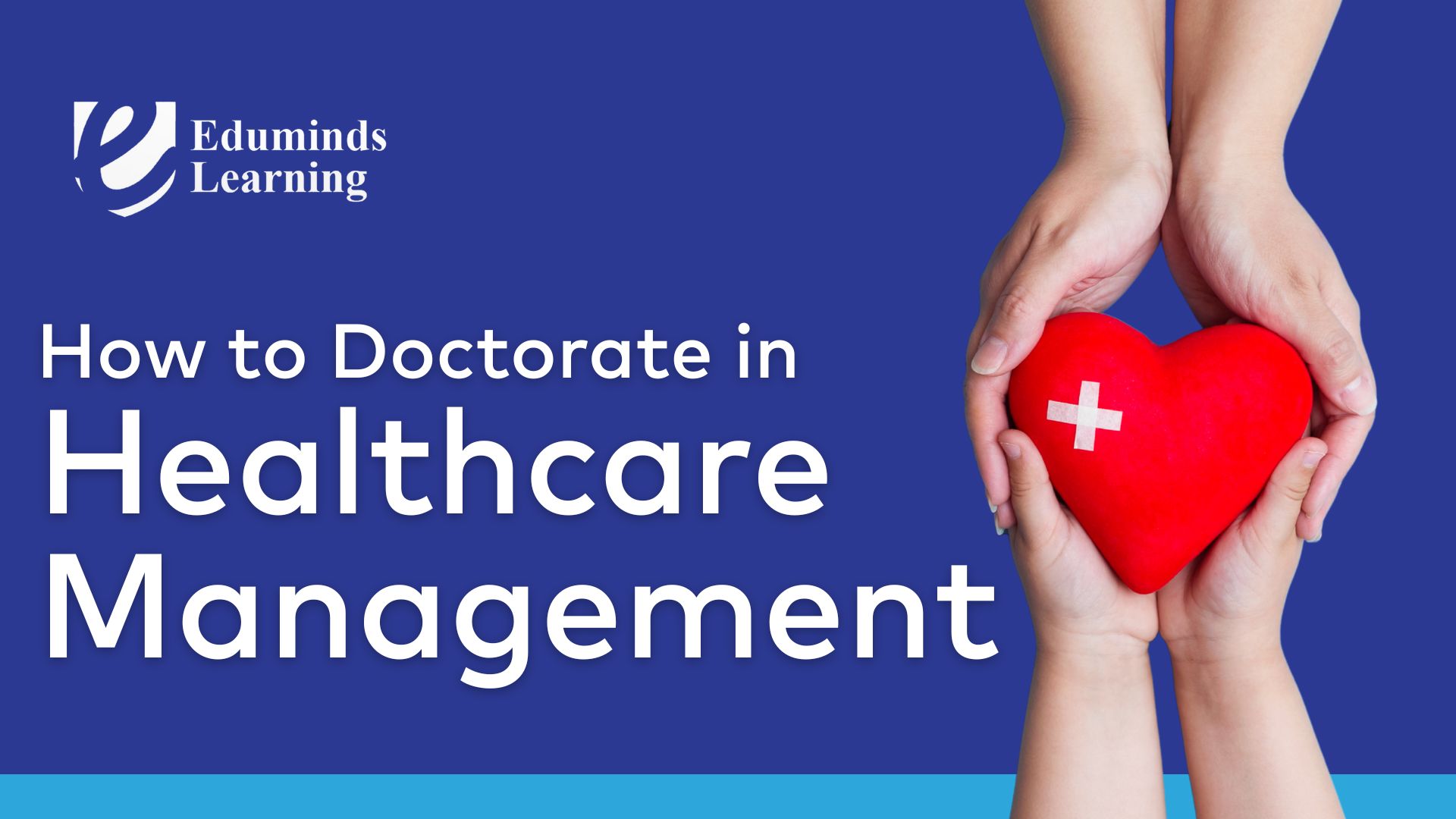
Not every surgery and procedure is merely a nice step in becoming a doctorate in healthcare management, but a professional move. In the era of unprecedented complexity of healthcare systems increasing costs, workforce shortages, digital transformation, regulatory pressure, and patient safety demand organizations have leaders who can think critically, manage systems, and develop evidence-based solutions.
\nThe guide is composed to address professionals and future scholars who wish to have a clear and realistic perspective as to how to doctorate in health care management- starting with the correct pathway to take and the admission requirements as well as negotiating the research, employment and long term effects. You will get to know not only how to do something, but why every step is important.
\n\nDoctorate of healthcare management is the ultimate degree in the area of healthcare leadership, policy, and administration. It is aimed at people who would like to work at the cross-section of healthcare delivery, organizational leadership, economics, ethics, and research.
\nGraduate study is based on, unlike entry-level management programs:
\n1.Advanced systems thinking
\n2.Healthcare organization strategic decision-making.
\n3.Policy analysis and reform
\n4.Evidence based leadership and research methodology.
\n5.New additions to the body of knowledge in healthcare management.
\nGrads are frequently employed as top managers, policy makers, academic scholars, consultants, or executives.
\n\nIt is necessary to make familiar with the two main doctoral paths prior to joining a doctoral program in healthcare management.
\nA PhD in healthcare management is research-based and theory-oriented. It prepares graduates to:
\nIt is the best way when you are planning to be in academia, in research leadership or in think tanks in the long run.
\nProfessional doctorates are focused on practical leadership and problem-solving. They focus on:
\nThis path is more appropriate to the senior professionals who would prefer to stay on practice and receive a doctoral qualification.
\nThe main point is that the PhD is best taken when one should do research-intensive work; a professional doctorate should be chosen when one needs to work on the executive level.
\n\nThe healthcare is one of the most controlled and complicated industries in the whole world. Leadership decisions have an impact on patient outcomes, financial sustainability, and public trust.
\nHealthcare managers at the doctoral level are becoming more useful since they are able to:
\nAs workforce studies in health administration indicate, organizations that are headed by an executive with advanced training have a better performance on quality measures, compliance and long term planning. Doctoral training prepares leaders to think outside operational solutions and systemic problems.
\n\nThe criteria to admission depend on the institution; however, the majority of healthcare management PhD requirements contain the following main components.
\nA master degree in healthcare management, public health, business administration, nursing leadership or a similar program.
\nThere are programs that can take in outstanding students who have good performance and experience at undergraduate level.
\nThe following are desirable among the applicants of many programs:
\n1.3-5 years of healthcare administration, policy, consulting, or clinical leadership experience.
\n2.Evidence of knowledge on healthcare systems.
\nYou become stronger with experience and add depth to the classroom and research discussions.
\nThe applicants usually are evaluated on:
\n1.Academic writing ability
\n2.Faculty alignment in research interest.
\n3.Previous knowledge on statistics, research methods or policy analysis.
\nA well defined research interest can go a long way in enhancing admissions.
\nMost programs require:
\nActionable insight: The statement of purpose is a narrow statement that connects your career experience with your intentions to research in the future. It is usually what successful applicants do that differentiate themselves.
\n\nThe duration taken to complete is based on program design and enrolment.
\n1.Full-time PhD programs: 3-5 years
\n2.Part or full time or professional doctorates: 4-7 years.
\nOnline doctorate healthcare management programs might have greater levels of flexibility but need high levels of self-discipline.
\nResearch and dissertation stage tends to define general time frame. Applicants that have clear research questions and regular supervision are more likely to finish in a shorter period.
\n\nAn average healthcare management doctoral program is a combination of coursework, research training and dissertation.
\nMethods of health services research.
\nThe dissertation will entail an original research on a true issue in healthcare management. Topics may include:
\n1.Quality and hospital performance.
\n2.Models of health workforce leadership.
\n3.Healthcare system digital transformation.
\n4.Reform and policy effectiveness.
\n\nThe increase in online doctorate medical management courses has increased access by working professionals. Online doctorates may be as rigorous as campus doctorates when accredited accordingly.
\n1.Full time professional flexibility.
\n2.Reduced relocation costs
\n3.Availability of international faculty and colleagues.
\n1.Establish institutional accreditation.
\n2.Guarantee high-quality research supervision.
\n3.Establish confirmation expectations of dissertation and publication.
\nUseful tips Employers and academic institutions value accreditation and research output- not delivery mode.
\n\nSuppose the example of a middle-aged hospital manager who has 10 years working experience. Upon enrolling at a doctoral program, she directed her dissertation to the optimization of patient flow and emergency department congestion.
\nHer research:
\nIn less than two years after graduation, she shifted to a healthcare policy advising position, where she affected changes to the entire system. This career path depicts the way in which doctoral research may have a direct influence on practice.
\n\nGraduates work in high impact positions that are varied:
\n1.Healthcare or executive director, CEO.
\n2.Policy analyst or advisor
\n3.Director of a research or faculty of a university.
\n4.Healthcare consultant
\n5.NGOs and international health organizations Leadership.
\nPhDs tend to confer strategic power and not necessarily a rise in rank.
\n\nTime management is critical. Each successful candidate will tend to:
\nDoctoral studies are strenuous. Delays are avoided through early interaction with supervisors and real scopes of research.
\nDoctoral study is a marathon. Easy long-range objectives and regular targets are used to maintain the momentum.
\n\nDoctorate programs are an extreme commitment. Options include:
\nBefore enrolling, it is necessary to have transparency with regard to total cost and duration.
\n\nTo do a doctorate, one should do it when:
\nWhen these requirements match, then it is probably high time to apply and move on to leadership and academic influence.
\n\nMake clear the type of PhD or a professional doctorate that suits your objectives.
\nFinding and shortlisting accredited programs which matches your interests.
\nThe global healthcare systems are changing at a rate that cannot be managed using traditional models of leadership. The doctorate in healthcare management provides the professionals with the intellectual flair, strategic thinking, and research potential to spearhead that change in a responsible manner.
\nIt will require dedication, regardless of whether you get a PhD in healthcare management, a professional doctorate or an online doctorate healthcare management program- but the end results are everlasting. Doctoral graduates influence policy, enhance systems and train the new generation of healthcare leaders.
\nA doctorate can be your strongest professional reward in case your goal is more than just handling the current problems and creating the healthcare systems of tomorrow.
\n\nLoading comments…
Our experts will contact you within 24 hours











Subscribe Now — Don't Miss Our Future Updates!
![[object Object]](/_next/static/media/white-logo.e43d74a5.svg)
Your Dreams - Our Mission
![[object Object]](/_next/static/media/star.e839977c.svg)
![[object Object]](/_next/static/media/clutchco.d9d205d7.svg)
![[object Object]](/_next/static/media/google.e753ca54.svg)
![[object Object]](/_next/static/media/facebook.8a231495.svg)
![[object Object]](/_next/static/media/trustpilot.77877b99.svg)

Eduminds Learning
LLC
30N Gould ST STE R, Sheridan
WY 82801, United States
+1 (307) 295-0570
Eduminds Learning Private Limited
D-26, Block D, Sector 59, Noida Uttar Pradesh - 201301 India.
+91 6387739671, +91 9289919899

Eduminds Learning Limited
Unit 2A, 17F, Glenealy Tower No 1, Glenealy Central Hong Kong.
+44 2045922871

Eduminds Learning
LLP
128 City Road, London, EC1V 2NX,
United Kingdom
+44 7520 694 197
Copyright © 2026 Eduminds Learning. All Rights Reserved.

